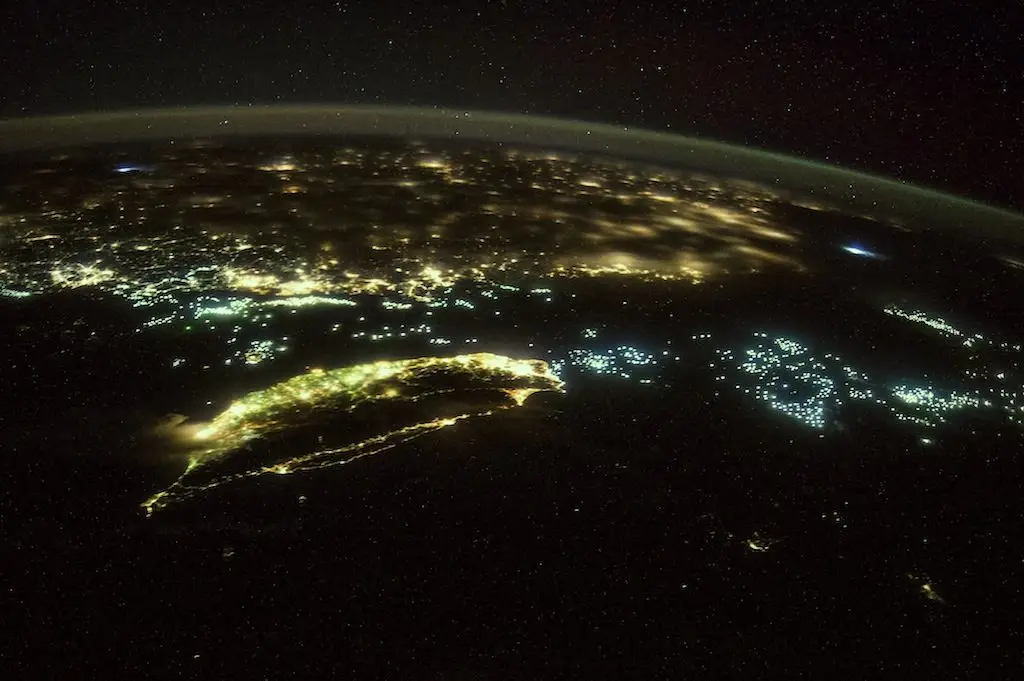
The country codes used in the UN/LOCCODE and ISO standards are the fruits of a collective misdeed and fail to represent Taiwan’s true legal status
For most people around the world, the codes that represent their countries are rarely a bother to them, as they correctly stand for the sovereign state that they inhabit. That is not the case for the people of Taiwan, however. Many country code tables, such as UN/LOCCODE (United Nations Code for Trade and Transport Locations) and ISO 3166 (codes for the representation of names of countries and their subdivisions), designate Taiwan as a “Province of China.”
Besides irritating the majority of those in Taiwan who consider themselves Taiwanese rather than Chinese, the code issue is also an irritant for friends of Taiwan, partners of Taiwanese businesses, and many multinational service providers who waste countless hours clarifying that Taiwan and China are different entities and that any restrictions imposed on China should not be applied to Taiwan.
Of course, this problem doesn’t come from nowhere. It is a by-product of the “controversy” over the legal status of Formosa (Taiwan) and the Pescadores (Penghu islands) that stems from historical incidents, the interests of great powers, and international dynamics.
The legal status and country code issue over Taiwan can be examined from a legal, factual, and political perspective.
From a legal point of view, under relevant historical documents the sovereignty of Taiwan and Penghu remains undetermined. Those documents include two wartime statements (the Cairo Communiqué and the Potsdam Declaration), one cease-fire accord (the Japanese Instrument of Surrender), one decisive peace treaty (the San Francisco Peace Treaty with Japan of 1951, SFPT), and one treaty derived from the SFPT (the Sino-Japanese Peace Treaty of 1952, SJPT). Since wartime statements of intent and cease-fire accords cannot in and of themselves transfer sovereignty over a territory to anyone, and since the SFPT did not stipulate the identity of the receiver country, the “owner” of sovereignty over Taiwan therefore remains unsettled.
Furthermore, according to the post-war consensus of decolonization clearly expressed in the UN Charter, the future of such territories should be decided by their people through a plebiscite proving the dully exercise of their right to self-determination. Simply put, Taiwan is not legally a part of China but rather a region whose “owner” should to be determined by the people who live on its territory. Therefore, it is legally wrong to label Taiwan as a “Province of China” in the country code tables.
Second, as a matter of fact, since October 25, 1945, Taiwan and Penghu have been formally occupied and administered by a political entity: the Republic of China (ROC). The ROC was the universally recognized Chinese government until October 25, 1971, when Resolution 2758 was passed in the UN Assembly. Thereafter, China’s UN seat belonged to the People’s Republic of China (PRC). Nevertheless, the ROC still claims to be “the only legal government of the whole China, which includes Taiwan.” Of course, this entity’s claim of sovereignty over Taiwan was never legal to start with, since the matter of legal sovereignty over Taiwan has never been determined. However, due to the fact that Taiwan was under the governance of the ROC, which illegally labeled Taiwan as part of its sovereign territory at the time when Resolution No. 2758 was put to a vote, many countries wrongly concluded that sovereignty over Taiwan had also been transferred to the PRC government.
This is a serious misunderstanding, and the UN/LOCCODE and ISO 3166 errors are conceivably a product of that. To prevent further misunderstanding, it is therefore necessary that the codes be corrected so as to reflect Taiwan’s legal status.
As for the political aspects, out of nationalism, imperialism, and disrespect for the international order, China has consistently made illegal claims of sovereignty over Taiwan by exploiting its position at the UN Security Council and its economic power to induce or threaten other countries to recognize her claims. By singing the same song as China at the UN and other international organizations, these countries have allowed the line between Taiwan and China to become more ambiguous. Here again, the mistaken country codes used in the UN/LOCCODE and ISO standards are the fruits of this collective misdeed.
China undoubtedly has great political power, but it is never wise to remain silent when facing gangsters, because cowardice will only embolden them. Instead, the international community should show bravery by rectifying the incorrect country codes for Taiwan in both the UN/LOCCODE and ISO standards.
Given the legal fact that the sovereignty of Taiwan is undetermined rather than under Chinese control, and that it should be decided by her people in accordance with the principle of self-determination through plebiscite, the current governing entity on Taiwan is merely an agent of the World War II Allies and never acquired sovereignty over Taiwan. UN Resolution 2758 only made the said entity no longer the representing government of China without making Taiwan the legal territory of the successive Chinese government.
All the signatories to the SFPT, as well as countries that are currently being victimized by China’s territorial ambitions, should together pass a resolution to rectify the country code of Taiwan in the UN/LOCCODE and ISO standards by dropping any reference to China and correctly defining it as “Taiwan” or “Taiwan & Penghu.” Furthermore, the resolution should be accompanied by a note saying, “sovereignty undetermined, to be decided by self-determination.”
Doing so would send a strong signal to Beijing and, we can only hope, force it to rethink its recent behavior. It would also tell the Chinese leadership that forcing global organizations to falsely admit that Taiwan is part of her territory will no longer be tolerated by the international community.